
Grab a cup of coffee, because this one can save you real money.
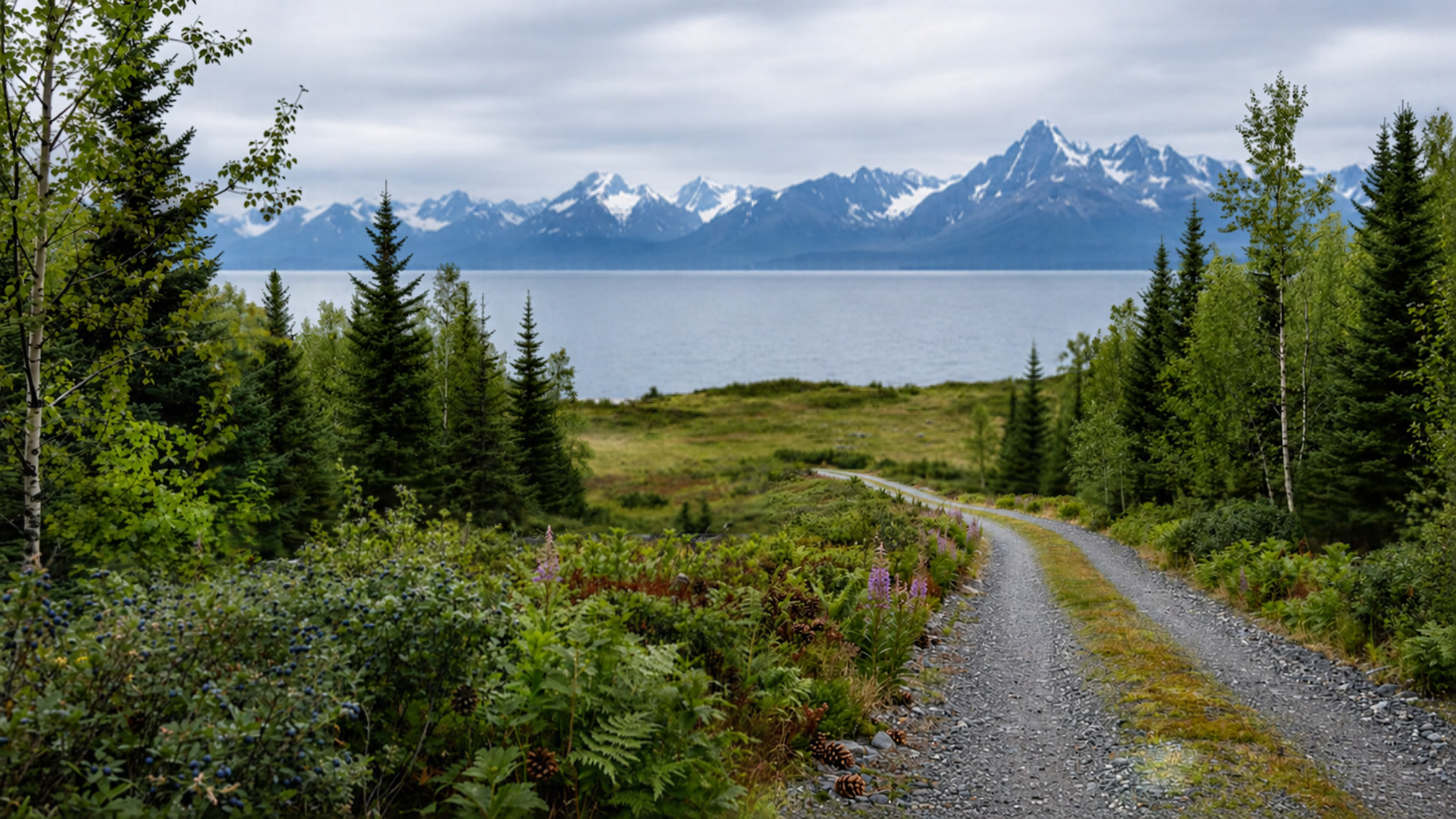
Picture this: you find five wooded acres outside Anchor Point. The price is reasonable, you can see the volcanoes across Cook Inlet on a clear day, and the map shows a right-of-way running right up to the property line.
Then you drive out to take a look, and the “road” turns out to be a wall of alders and spruce with a moose trail through the middle.
This happens more often than you’d think. So if you’re buying land on the Kenai Peninsula, here’s the question I want you to ask before you get attached to any parcel:
Can I legally get there, and can I physically get there?
Those sound like the same question. They’re not.
Legal Access and Physical Access Are Two Different Things
Legal access means you have a recorded right to reach the property. That could be a public road, a dedicated right-of-way, or a recorded easement across someone else’s land.
Physical access means there’s an actual route you can use today, whether that’s by truck, on foot, by boat, or by snowmachine.
A parcel can have one without the other. The Alaska Department of Natural Resources makes this point to land buyers, and it’s worth taking seriously. A right-of-way on paper might still need clearing, grading, culverts, and permits before you can drive a vehicle in. That work costs money, and it belongs in your budget before you make an offer, not after.
An Alaska Twist: Section-Line Easements
If you’re moving here from the Lower 48, you’ve probably never heard of these.
Much of Alaska was surveyed in a grid of one-mile sections, and in many places there’s a public right-of-way running along those section lines. Depending on the history of the land, that strip can be 33, 50, 66, 83, or 100 feet wide. But not every section line has one, and some have been officially vacated.
Section-line easements can work for you or surprise you:
- They can provide access. Some parcels are reached by way of a section-line easement.
- They can affect your plans. If one runs along or through your parcel, the public has the right to use it, and you can’t block it or build in it.
Figuring out whether a section-line easement actually exists can be technical. DNR recommends contacting its Public Information Center before building access in one. You can find more on the DNR access page.
What Does Your Easement Actually Allow?
An easement gives someone the right to use land they don’t own for a specific purpose. Not all easements are the same, though. A right to walk across a neighbor’s land isn’t the same as a right to build and maintain a driveway there.
The wording matters: where the easement is, who it benefits, what it allows, and whether it’s recorded. If the documents are unclear, have a title professional or an Alaska real estate attorney review them.
One more thing: a neighbor saying “Sure, use my driveway” is a nice gesture. It isn’t recorded legal access, and it may not carry over when that neighbor sells.
DNR has a helpful overview of how easements work in Alaska.
Don’t Rely on the Map Alone
I use online property maps all the time. They’re a great starting point, but they’re not the final word.
In Alaska, property boundaries are set by survey monuments and recorded plats, not by trails, cleared areas, or lines on a map app. Recorded plats often include notes about easements, setbacks, and restrictions, and those notes can matter as much as the lines themselves.
Before buying land, look at the recorded plat, the legal description, the title report, and any access documents. You can search recorded documents through the Alaska Recorder’s Office. If boundaries or access routes aren’t clear, a surveyor can help.
Who Plows the Road?
Let’s say there’s already a gravel road to the property. That’s a good start, but here’s a question a lot of buyers don’t think to ask: who takes care of it?
The Kenai Peninsula Borough Road Service Area maintains more than 645 miles of roads, mostly gravel. But the borough only maintains roads that have been certified for its maintenance program, and to qualify, a road generally has to meet the borough’s construction standards and have a final recorded plat. Plenty of subdivision and private roads on the Peninsula aren’t on that list.
If the borough doesn’t maintain the road, someone else does. That might be you, or you and your neighbors sharing the cost. So ask:
- Is the road borough-maintained, privately maintained, or not maintained at all?
- Is there a written road maintenance agreement?
- Who handles snow removal and grading, and how are costs shared?
- What is the road like during spring breakup?
A road that’s easy to drive in July can be a very different story in March. And if you plan to build or improve a road in a borough right-of-way, the borough requires a right-of-way permit before construction starts. Details are on the KPB Roads page.
The Lender’s View: How Access Affects Financing
Before I became a broker, I spent years as a mortgage loan originator, so I look at land through a lender’s eyes, too. Here’s something that surprises a lot of buyers: access doesn’t just affect how you get to the property. It can also affect whether you can finance it.
- Lenders care about legal access. A parcel without documented legal access can be hard or even impossible to finance.
- Land loans look different from home loans. Fewer lenders offer them, and they usually come with larger down payments and shorter terms. Talk with a lender early if you’ll need financing.
- Ask about title insurance and access. Ask your title company whether the policy covers access or lists it as an exception. That one line in the title commitment is worth understanding.
Paying cash? Access still matters. Someday you may sell, and your buyer may need a loan. Land that’s hard to finance can be harder to sell.
Think About Utilities Before You Buy
If you’re planning to build, access is only part of the picture. Here are a few questions to start with:
- Power: How far is the nearest line? Homer Electric Association can tell you what a line extension would involve.
- Water: Is there a well, or will you need to drill one? I covered testing private wells in Private Well Water Testing in Alaska: What Homeowners Need to Know.
- Wastewater: What are the options for a septic system, and are the soils suitable?
Also keep in mind that a utility easement and a vehicle access easement are two separate things. Having one doesn’t give you the other.
What About Seasonal or Off-Road Access?
Some Alaska properties are reached by trail, by water, or only during certain seasons. That’s not automatically a bad thing. For a recreational cabin, it might be just what you’re looking for. If you plan to live there year-round, reliable access probably moves to the top of your list.
The key is matching the property to how you plan to use it.
Questions to Ask Before Buying Land on the Kenai Peninsula
- Is there recorded legal access to the parcel?
- Can you physically use that access, and in which seasons?
- Are there section-line easements on or near the property?
- What easements, setbacks, and restrictions are on the recorded plat?
- Who maintains the road, and is there a maintenance agreement?
- Can the property be financed, and does the title policy cover access?
- What will it take to bring in power, water, and wastewater?
- Does the property fit how you plan to use it?
Some answers will come from title companies, surveyors, lenders, contractors, utility providers, or the borough. That’s normal. It’s all part of doing your homework.
Frequently Asked Questions
Can land in Alaska have legal access but no road?
Yes. A parcel can have a recorded right-of-way or easement even if no road has ever been built. Check both the legal rights and the conditions on the ground.
What is a section-line easement?
It’s a public right-of-way that may run along the section lines of Alaska’s survey grid. Not every section line has one, so the history of the land has to be researched.
Does the borough maintain every road on the Kenai Peninsula?
No. The Kenai Peninsula Borough Road Service Area maintains roads that have been certified for its program. Many private and subdivision roads are maintained by property owners.
Can I get a loan to buy vacant land?
Often, yes, but land loans usually have different terms than home loans, and lenders typically want documented legal access. Talk with a lender before you make an offer.
Should I get a survey before buying vacant land?
It’s often worth it, especially when boundaries or access routes aren’t clear. A surveyor can tell you what type of survey fits the property.
Final Thoughts
Buying land on the Kenai Peninsula can open the door to some great opportunities. Two parcels can look almost identical on paper and have very different costs to develop. Neither one is automatically a bad buy. You just want to know which one you’re getting before you commit.
A beautiful view is a bonus. Knowing what you’re buying is essential.
I’ve always said that if my clients get to closing with unanswered questions, I haven’t done my job. If you’re looking at land in Homer, Anchor Point, Ninilchik, or anywhere on the Peninsula, I’m happy to help you work through these questions and connect you with the right professionals.
Marjorie Pellegrini | Broker/Owner, Go North Realty
GoNorthRealty.com
This article is for general educational purposes and isn’t a substitute for professional legal, surveying, engineering, title, lending, or land-use advice.
Related reading: The 5-Minute Test: Buying a Home in Homer, Alaska the Smart Way